
← All insightsFor sales representatives and sales managersArticle · 2023
Three connected levels
The Business Map helps you understand the business. META helps you choose a method. The Sales Wheel is about what then needs to be done: the conversation, the questions, the presentation and the close. Strategy, tactics and execution, in that order.
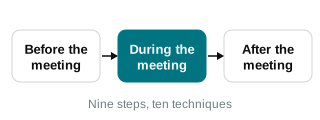
The sales process: before, during and after the meeting
The first documented sales process came from the Ford salesman Norval Hawkins in the 1920s and still underpins most of them. It has three phases and nine steps.
- Before the meeting: prospecting, qualification and preparation.
- During the meeting: contact, needs analysis, presentation, handling objections and closing.
- After the meeting: follow-up, so that the customer receives their delivery and is satisfied.
- Most sales processes are variations on this theme. The difference between the methods is where the emphasis lies.
Ten techniques in the wheel
The Sales Wheel is the sales representative's toolbox: appointment setting, meeting skills, needs analysis, questioning skills, presentation skills, building a persuasive case, objections and buying signals, negotiation skills, sales proposal skills and closing skills. All are needed at some point, but not equally in every deal.
In product selling, questioning, the persuasive case, objection handling and closing carry the most weight. In solution selling, it is meeting skills, needs analysis, presentation and negotiation. Insight-led selling leans on presentation, the persuasive case, negotiation and the sales proposal. Influence-based selling on presentation, the persuasive case and decision techniques. Classic techniques for capturing interest, countering objections and driving to a close work less well in complex deals than in simple ones.
Method fidelity
Every method has a few core components that make it work. Research on how methods are implemented shows that the result depends on whether they are used as intended, and on three things around them: competent people, an organisation that supports the way of working and leadership that coaches. Without them, a good method ends up in a binder.
How you can use it
Choose two techniques per sales representative to practise over the coming quarter, and choose them based on the method your deals actually require, not on what is easiest to practise. Follow up in real customer conversations, not in role play.
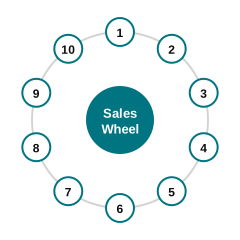
- 1Appointment setting
- 2Meeting skills
- 3Needs analysis
- 4Questioning skills
- 5Presentation skills
- 6Building a persuasive case
- 7Objections and buying signals
- 8Negotiation skills
- 9Sales proposal skills
- 10Closing skills
Source
Norval Institute, META – Best Practice för framgångsrik försäljning, article by Roberto Picornell and Anders Torelm, January 2023, and Meta-Försäljning, white paper from Norval Institute. The sales process after Hawkins, N. (1920), The Selling Process.
The text is a summary of the article and white paper written for the web. The diagrams show the process and the wheel in simplified form.